When you decide to handle alcohol more deliberately, the first advice you get is the useless one: "just pull yourself together." Discipline, character, willpower. Not working? You must not be trying hard enough.
It doesn't work. And it's not because you're weak. Research has been saying something else since the early 90s: how we drink depends less on personal resolve and more on the environment we live in. Read the environment right and you get levers willpower will never hand you.
Four forces that shape drinking behavior
In 1992, researcher Genevieve Ames proposed looking at alcohol not as one person's habit but as part of a culture - the shared space a group of people lives in. She started with workplaces. The frame fits anything, though: family, friend group, city, country.
Four interlocking forces drive the drinking in her model.
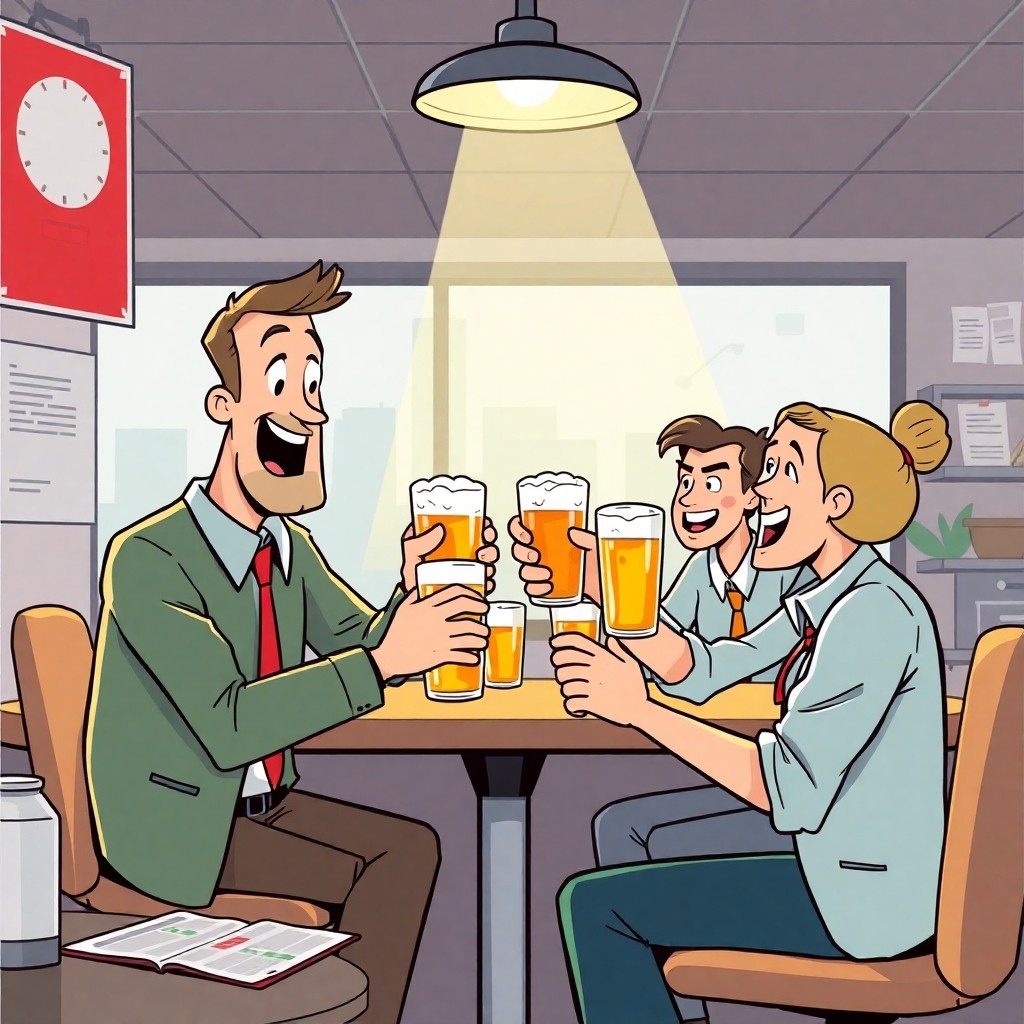
Norms are the shared, unspoken assumptions about what counts as normal. Is it okay to skip the glass at a birthday. Is it weird not to drink at a work event. Is a mild Monday hangover just part of life, or a warning. Nobody says these out loud. We still use them to decide what typical looks like.
Climate is the atmosphere around alcohol. How tightly drinking is woven into the way you relax, celebrate, decompress, socialize. If wine is the automatic companion to any evening, and a Friday without it feels incomplete, that's climate.
Availability is how easy it is to get a drink. The store on the corner open till midnight. A bar on every street. A liquor cabinet at home stocked "just in case." Easier access, more drinking - that link is about as consistent as findings in this field get.
Formal control is rules plus whoever enforces them: sale laws, workplace policy, prices, taxes, age limits. The limiters somebody else sets for you.
The four run as a system. Weak control raises availability, availability normalizes frequent use, relaxed norms warm the climate, and the loop feeds itself.
Two forces you almost can't move
Here's where it goes wrong for most people. You try to get drinking under control and slam into walls you can't move alone.
Availability and formal control are external levers. You won't close the stores, change the taxes, rewrite laws, or cancel the tradition of alcohol on every holiday table. Clearing bottles out of the house helps, sure. Beyond that, these two are set by society, not by you.
Steering your drinking through them alone is like holding a diet by moving farther from every café. Sometimes it works. It's just not yours to control.
That's why "hold the line" fails so often. It ignores an environment built against you and dumps the whole load on willpower, the most exhaustible resource you own.
Two forces that are actually yours
Norms and climate are a different story. Culture shapes them, yes. But they end up living inside your head: your personal sense of what's normal, your personal weather around alcohol.
Those can change. Not by willpower. By changing what you see.
Most drinking runs on autopilot. A glass at dinner because that's what you do. A second pour because someone topped you off without asking. "Just a couple of beers" on Friday that quietly repeat every week. The whole picture rarely shows up in one place, and you can't consciously change something you never see.
Personal norms and climate start moving the moment the invisible becomes visible. When you notice what you're drinking and why. When you see a curve instead of a feeling: your peak, and when it starts to fade. When "light Friday" stops being one evening and turns out to be a pattern. Autopilot switches off. Suddenly there's a choice where there wasn't one.
That's the leverage point for one person: awareness.
How it works in practice
Three things move personal norms and climate.
Awareness. The habit of pausing for a second before you pour: do I actually want this right now, or is my hand just doing what it always does? That one question breaks the chain from trigger to glass.
Tracking. What you measure stops being vague. A week of drinking turns into a concrete picture - drinks, occasions, days, how the next morning felt - and your internal "this is normal" starts correcting itself. Not because anyone judged you. Because you finally see what's happening. Your own picture, not an average. You don't even need to install anything: try our online BAC calculator and see how your peak gets computed from your weight, your drinks, and time.
Reminders. Soft, well-timed prompts that hold the new norms in place until they turn into habit. Drink water. Take a beat between pours. Check in with how you feel. Support, not control.
None of this touches availability or formal control. Nothing gets banned, taken away, or blocked. It all works on your norms and your climate, the only territory that was ever yours.
Not a fight. A helm.
The goal isn't a war with yourself at the edge of willpower. The goal is authorship: you decide when and how, not autopilot and not the room you're standing in.
Availability and control will stay where they are. The world isn't going anywhere. Your personal norms and climate are another matter - those are entirely in your hands, and when they shift, the rest shifts with them. No strain. No sense that you're punishing yourself.
Sobriety isn't the goal. Your rhythm is. And rhythm is what you see, what you steer, what you tune to yourself, not to averages.