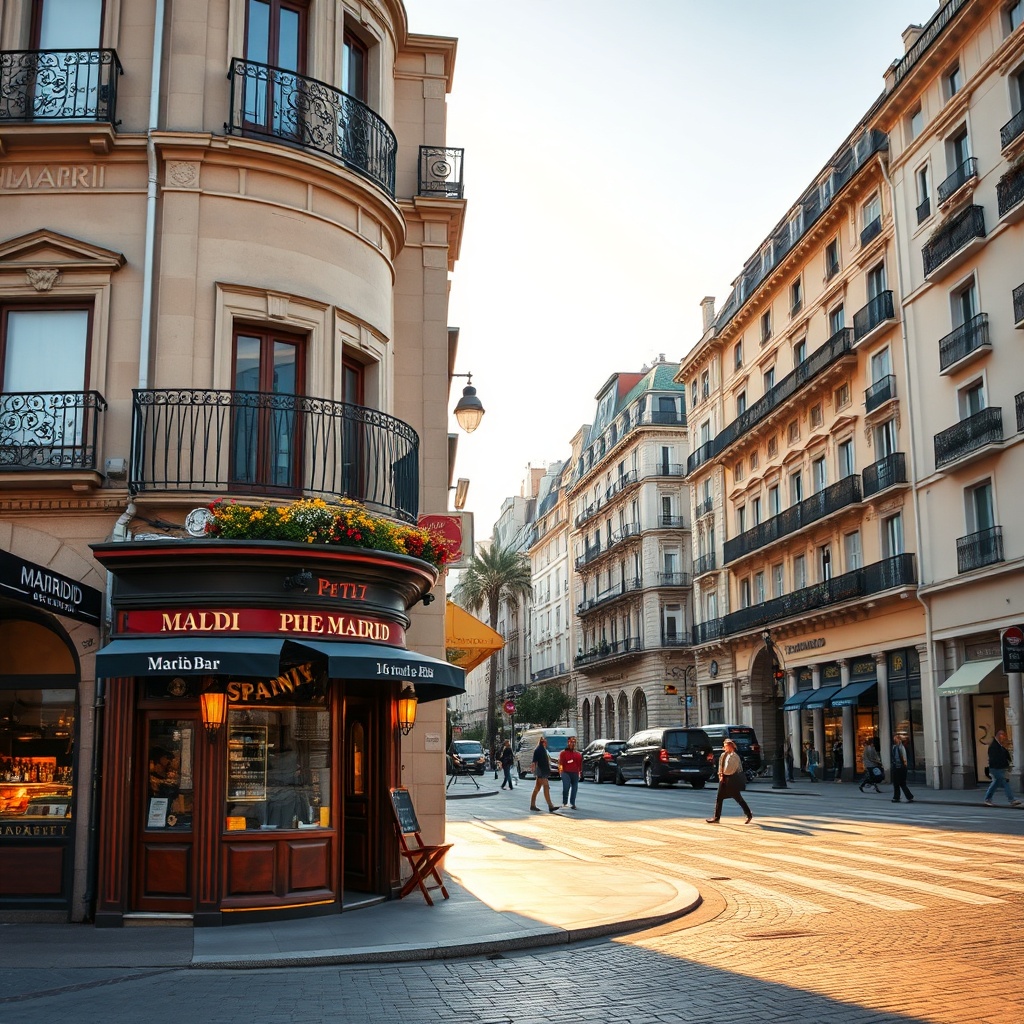
Walk five minutes in any direction from a school in Madrid and you'll pass more than a dozen bars and liquor stores. Within 500 meters, the average school had 79 alcohol outlets. Does all that density push teenagers to drink more? Researchers checked. A cross-sectional study in Health & Place covered 49 schools across the city, and the answer came back no.
What they did
The 49 schools sat in neighborhoods spanning a wide range of socioeconomic position (SEP), a composite measure of wealth, education, and occupational status in a given area. For each school the team counted every licensed alcohol outlet within a 500-meter street-network buffer. Street network, not a circle drawn on a map: actual walking distance.
Then the questionnaires. Students aged 14 to 18, asked about lifetime drinking, drinking in the past 30 days, drinking in the past 7 days, and binge drinking in the previous month. Collection ran through 2021 and 2022.
To decide which variables to adjust for, they drew a directed acyclic graph, a structured diagram of causal assumptions, then ran robust Poisson regression models comparing outlet density against each consumption measure.
What they found
- Two in three students (67%) had drunk alcohol at least once.
- Drinking was more common among older students, girls, students with more pocket money, students who saw drinking as low-risk, and students whose parents drank more.
- Kids at schools in wealthier neighborhoods reported more drinking than kids in lower-SEP areas. More, not less.
- After full adjustment, the number of alcohol outlets near a school had no statistically significant association with any drinking measure: lifetime, recent, or binge.
What it means
The researchers offer one explanation. When a neighborhood is already saturated with alcohol retail, one more outlet stops carrying information. Add another bar to a street that already has ten and nothing changes for the kid walking past. Somewhere there's a threshold where denser supply no longer drives up use, and at 79 outlets per school, Madrid is likely well past it.
So what does separate the kids who drink from the kids who don't? By the data: parental drinking habits, disposable income, and how risky they believe drinking is.
The wealth result points the same way. Money travels with you. A bar on the corner doesn't help if there's nothing in your pocket, and it isn't needed if there's enough.
67% of 14-to-18-year-olds had tried alcohol at least once. The outlet count didn't do that. Normalization runs through family and peers, and those channels are harder to map and much harder to regulate: what your parents drink, what your friends expect, how much cash you're carrying.
Caveats
Cross-sectional studies show associations, not causes. Students reported their own drinking, and self-reports tend to run below actual consumption. Delivery services and alcohol already sitting at home weren't captured at all. And this is one city with unusually high baseline saturation, so a null result here says little about places where outlets are scarce.
Source: Health & Place, doi:10.1016/j.healthplace.2026.103669